Tell us about the job
Takes about a minute. No obligation.
A short cooling season changes what a contractor looks for when a mini-split stops performing. Homes in Washington County, ID run cooling about two months a year, from July through August. The compressor starts and stops through July and August, then sits. Long idle periods let refrigerant leaks go unnoticed, capacitors degrade without heat cycling to reveal them, and drain lines grow mold that only shows when the unit finally runs again. A contractor diagnosing a repair here checks refrigerant charge and electrical components before assuming runtime wear, because the compressor simply has not logged enough hours for that to be the likely answer.
Half the homes in Washington County, Idaho were built in 1975 or earlier (2020-2024 ACS 5-year). A house that old has gone through at least one full equipment generation, and the mini-split running in it today is probably not the first system to occupy that wall bracket or that pad. When a refrigerant line develops a fault or a compressor starts drawing wrong, what a contractor finds inside the opened unit decides how the job goes: whether the part it needs is still in supply, or whether the repair scope has to change because it is not. That answer comes from the serial plate and the opened system, not from the age of the walls around it.
The Parts of a Mini-Split a Contractor Checks During Repair
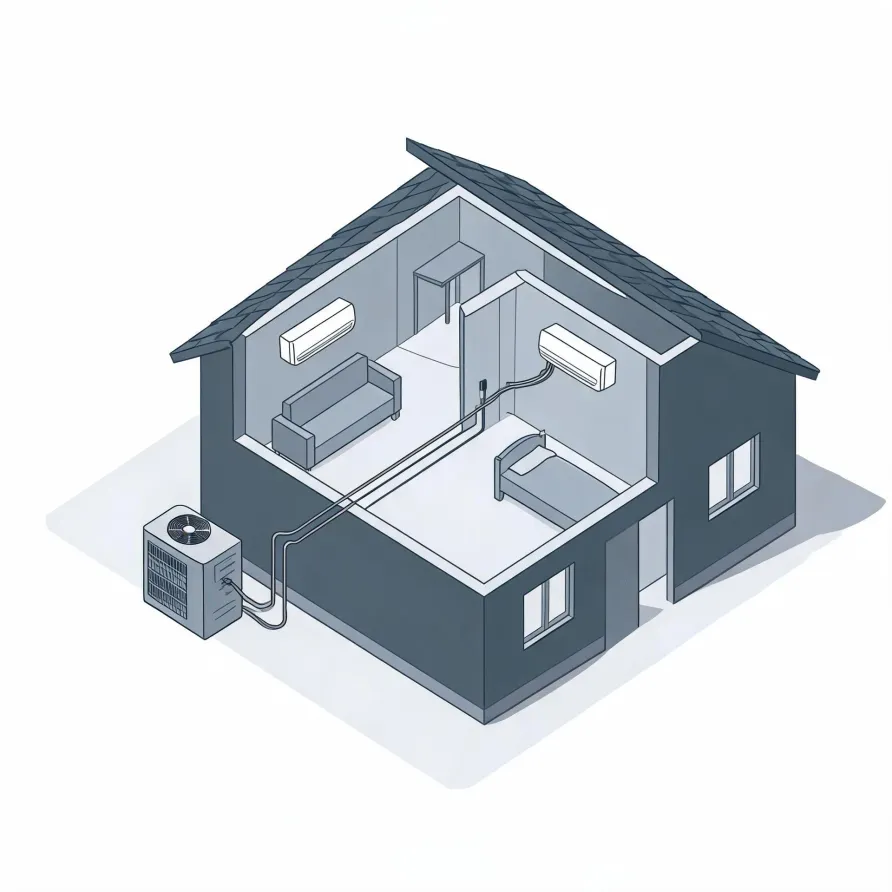
The indoor air handler mounts high on an interior wall and is the piece most homeowners notice first. It holds the evaporator coil, a blower fan, and the filter. When any of those fail, the unit might blow warm air, make noise, leak water, or stop responding to the remote.
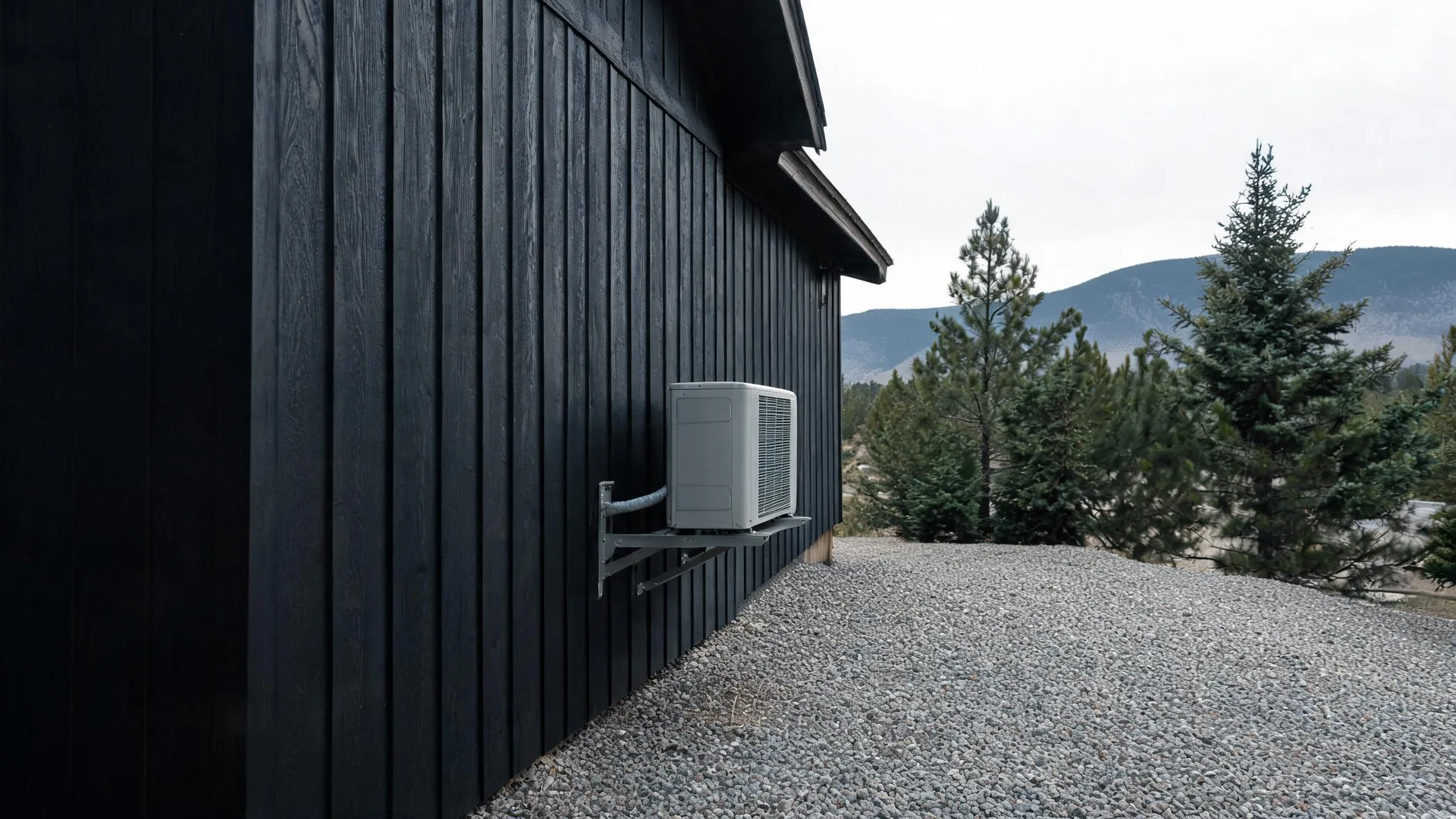
The outdoor compressor unit sits on a pad or bracket outside the house and does the heaviest mechanical work. A pair of refrigerant lines and a control wire run through the wall to connect the two units, and the condensate drain carries moisture out. A contractor works through both ends of that connection when tracking down a fault.
The drawing shows the general layout of a mini-split system, and a licensed contractor determines what applies to your specific installation.
Find a contractor in Washington CountyWashington County, Idaho, by the numbers
100 severe weather events were recorded in Washington County, Idaho between 2015 and 2024.
NOAA National Centers for Environmental Information, Storm Events Database, bulk CSV export, events 2015-01-01 through 2024-12-31.Half the homes in Washington County, Idaho were built in 1975 or earlier (2020-2024 ACS 5-year).
U.S. Census Bureau, 2020-2024 American Community Survey 5-Year EstimatesWashington County, Idaho holds 4,629 housing units (2020-2024 ACS 5-year).
U.S. Census Bureau, 2020-2024 American Community Survey 5-Year EstimatesOwners occupy 74.6% of the occupied homes in Washington County, Idaho (2020-2024 ACS 5-year).
U.S. Census Bureau, 2020-2024 American Community Survey 5-Year EstimatesRepair Rules & Code That Apply in Washington County, Idaho1 sourced standards and regulations
Licensing and Legal Requirements in Washington County, Idaho
Idaho requires a state certificate of competency for heating, ventilation and air conditioning work: it is unlawful to engage in the business, trade or practice without passing the examination and holding the certificate.
Weather Stress on HVAC Equipment in Washington County
Heating and cooling equipment in Washington County works against whatever the local climate delivers, and that workload accumulates over time. Repair demand in any area tracks closely with the stress the weather puts on the system, which is why the record below is part of the picture.
100 severe weather events, 2015–2024. Source: NOAA National Centers for Environmental Information, Storm Events Database.