Tell us about the job
Takes about a minute. No obligation.

A mini-split that sits unused through fall, winter, and spring can develop a refrigerant leak, a corroded electrical connection, or a weakening contactor with no sign until the homeowner turns it on in July. Homes in Gem County, ID run cooling about two months a year, from July through August. A contractor diagnosing a repair here checks the components that degrade during long idle periods, not just the ones that wear from running. Refrigerant charge, contactor condition, and coil cleanliness all shift while the system stands off, and those are where the first call of the season tends to point.
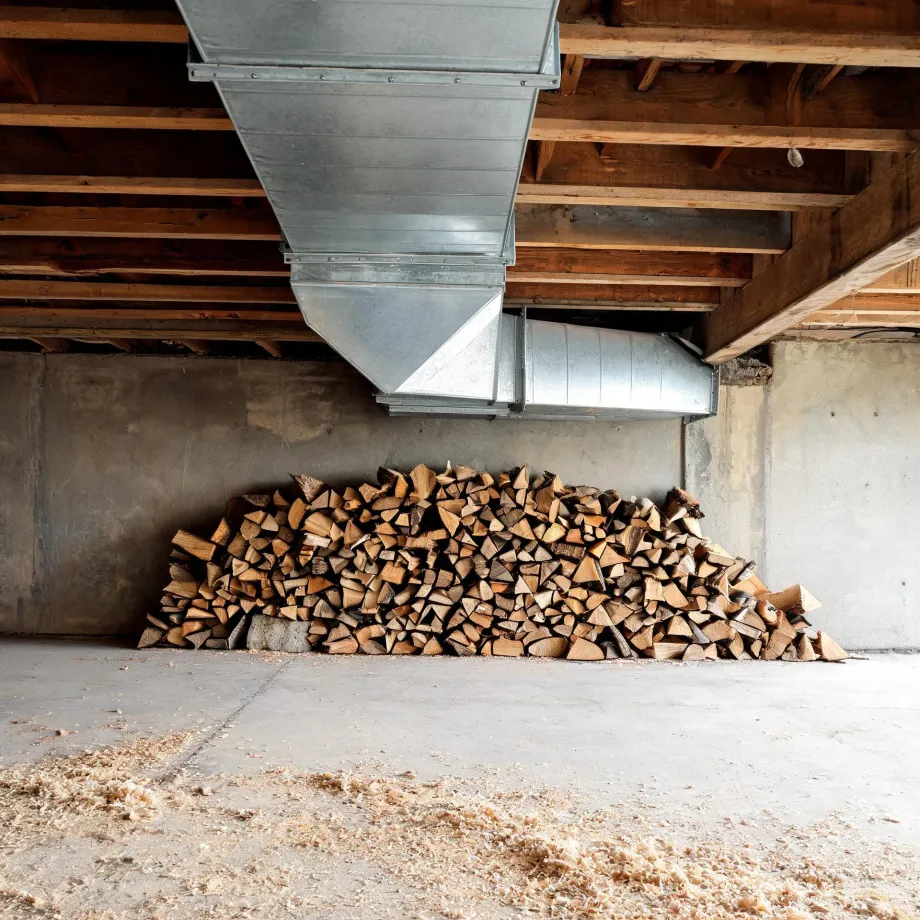
Refrigerant lines and wiring routed during an original install carry wear specific to what that install demanded, and when a mini-split develops a fault, those runs are part of what a contractor traces. Half the homes in Gem County, Idaho were built in 1983 or earlier (2020-2024 ACS 5-year). A system placed into housing of that vintage was connected to infrastructure that predates it, and when a repair opens the unit, what sits behind the wall or outside the envelope can shift the job. A refrigerant leak traced to a line set that was aged before the current head unit was ever mounted is a different repair from one contained inside a new component.
The Parts of a Mini-Split a Contractor Checks During Repair
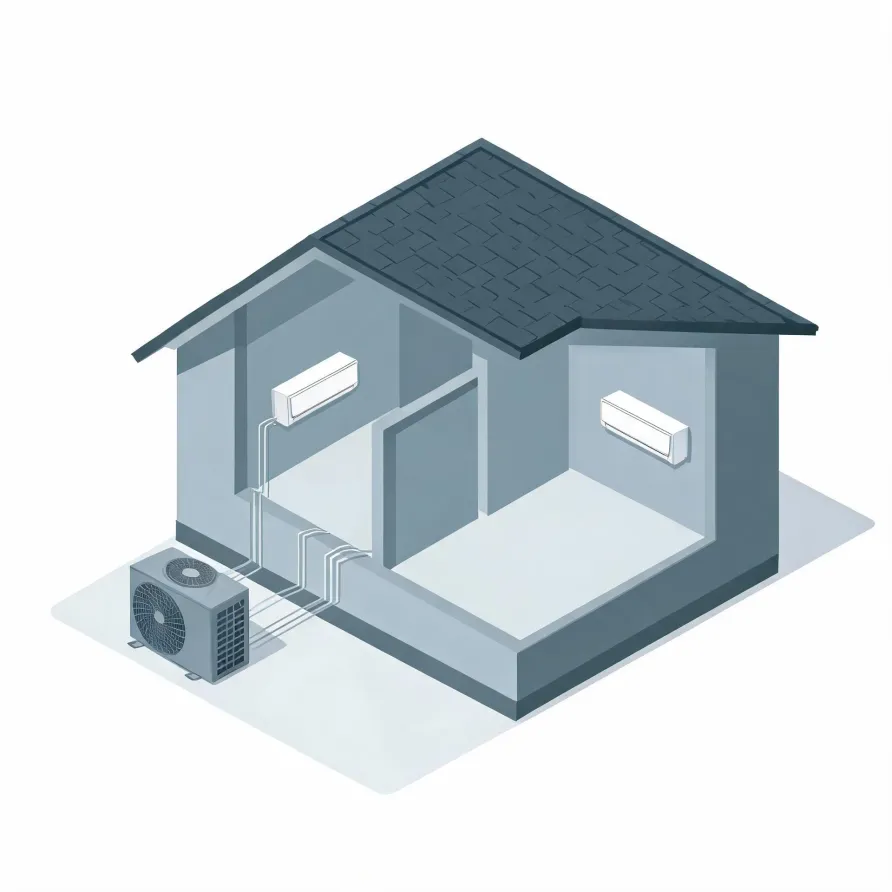
The indoor air handler mounts high on a wall inside the room and is where most homeowners first notice something is wrong. It holds the evaporator coil, the blower fan, and the filter. When cooling or heating fails, or airflow drops, the contractor starts here, checking the coil for ice or fouling and the fan for faults.
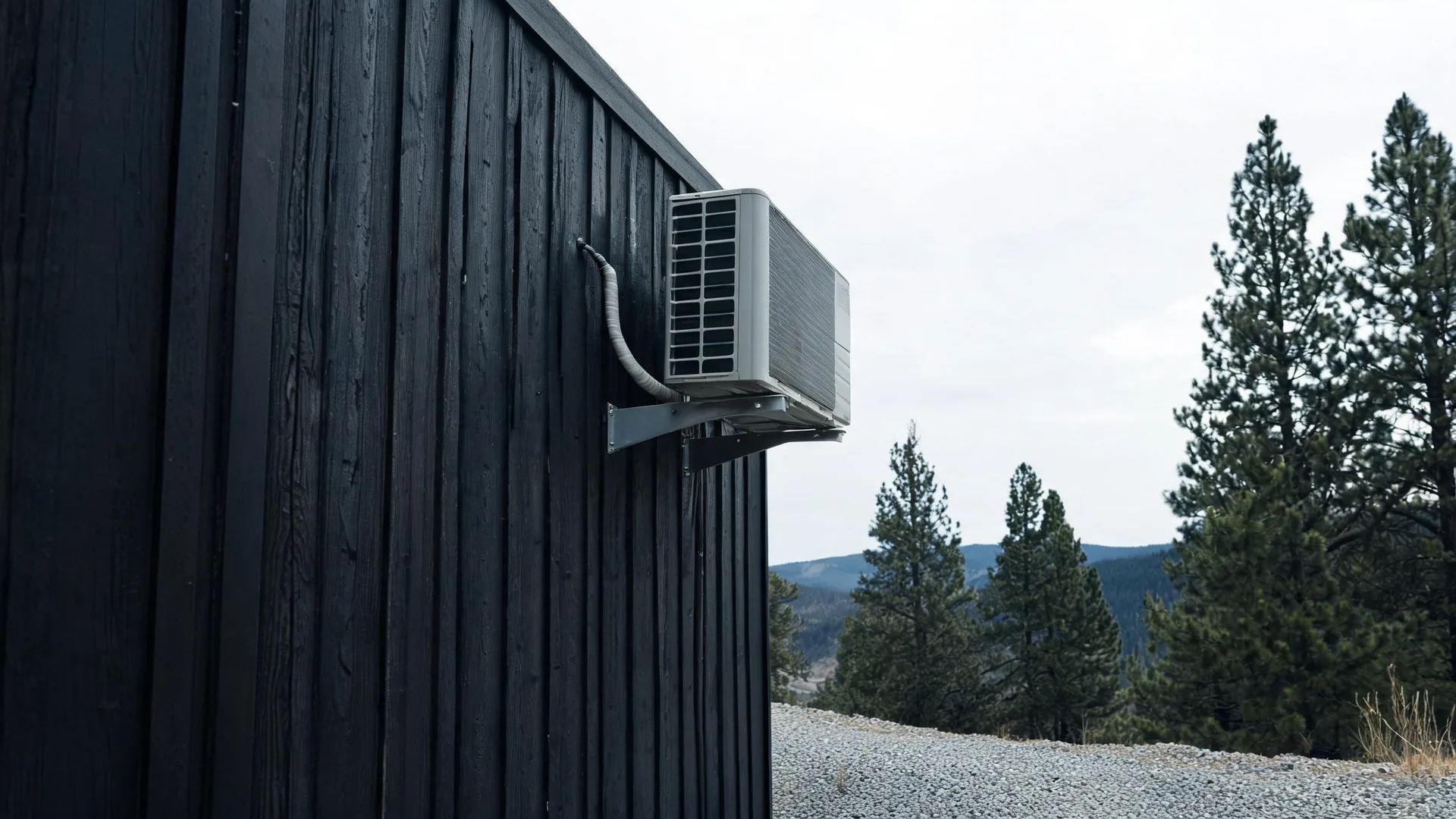
Outside, the condenser unit houses the compressor and the condenser coil. A refrigerant line set and a power and signal cable run between the two units, usually through a small hole in the wall. A fault anywhere along that line set, or inside the condenser, sends the contractor outside to trace it.
The drawing shows a typical mini-split layout, and a licensed contractor determines which components apply and what work is needed for your specific installation.
Find a contractor in Gem CountyGem County by the numbers
81 severe weather events were recorded in Gem County, Idaho between 2015 and 2024.
NOAA National Centers for Environmental Information, Storm Events Database, bulk CSV export, events 2015-01-01 through 2024-12-31.Half the homes in Gem County, Idaho were built in 1983 or earlier (2020-2024 ACS 5-year).
U.S. Census Bureau, 2020-2024 American Community Survey 5-Year EstimatesGem County, Idaho holds 7,954 housing units (2020-2024 ACS 5-year).
U.S. Census Bureau, 2020-2024 American Community Survey 5-Year EstimatesOwners occupy 76.0% of the occupied homes in Gem County, Idaho (2020-2024 ACS 5-year).
U.S. Census Bureau, 2020-2024 American Community Survey 5-Year EstimatesCodes & Standards Governing Mini-Split Repair in Gem County, Idaho1 sourced rules and standards
Licensing and Legal Requirements for HVAC Repair in Gem County, Idaho
Idaho requires a state certificate of competency for heating, ventilation and air conditioning work: it is unlawful to engage in the business, trade or practice without passing the examination and holding the certificate.
Weather Stress on HVAC Equipment in Gem County
Gem County's climate puts real load on heating and cooling systems year over year. How hard a mini-split works, and how often it needs repair, tracks closely with what the weather outside is doing.
81 severe weather events, 2015–2024. Source: NOAA National Centers for Environmental Information, Storm Events Database.