
Why your mini split smells when heating in Idaho
Why does my mini split smell bad when I turn on the heat?
You switch your mini split over to heat for the first time since spring and the smell that comes out stops you in your tracks. Musty, like a wet basement, or sharper, almost like something burning off. Either way you want to know if that's the unit failing or just something normal that clears up on its own after sitting idle through a hot, dry Idaho summer.
It's almost always dust or mold built up on the indoor coil and filter
A mini split that sat unused all summer collects dust on the coil and filter while the fan was off. When you switch to heat, that dust warms up and you get a faint burning or dusty smell for the first few minutes. That's normal and usually fades fast. A musty or sour smell is different. It means moisture got trapped in the indoor unit, often from condensation that never fully dried, and mold or mildew is growing on the coil. In Idaho, where gas heats most homes and the mini split may only run heat part of the year, that coil can sit damp and unused for months at a stretch. A smell that doesn't clear after the first few minutes of running points to that coil needing a real cleaning, not just a filter swap.
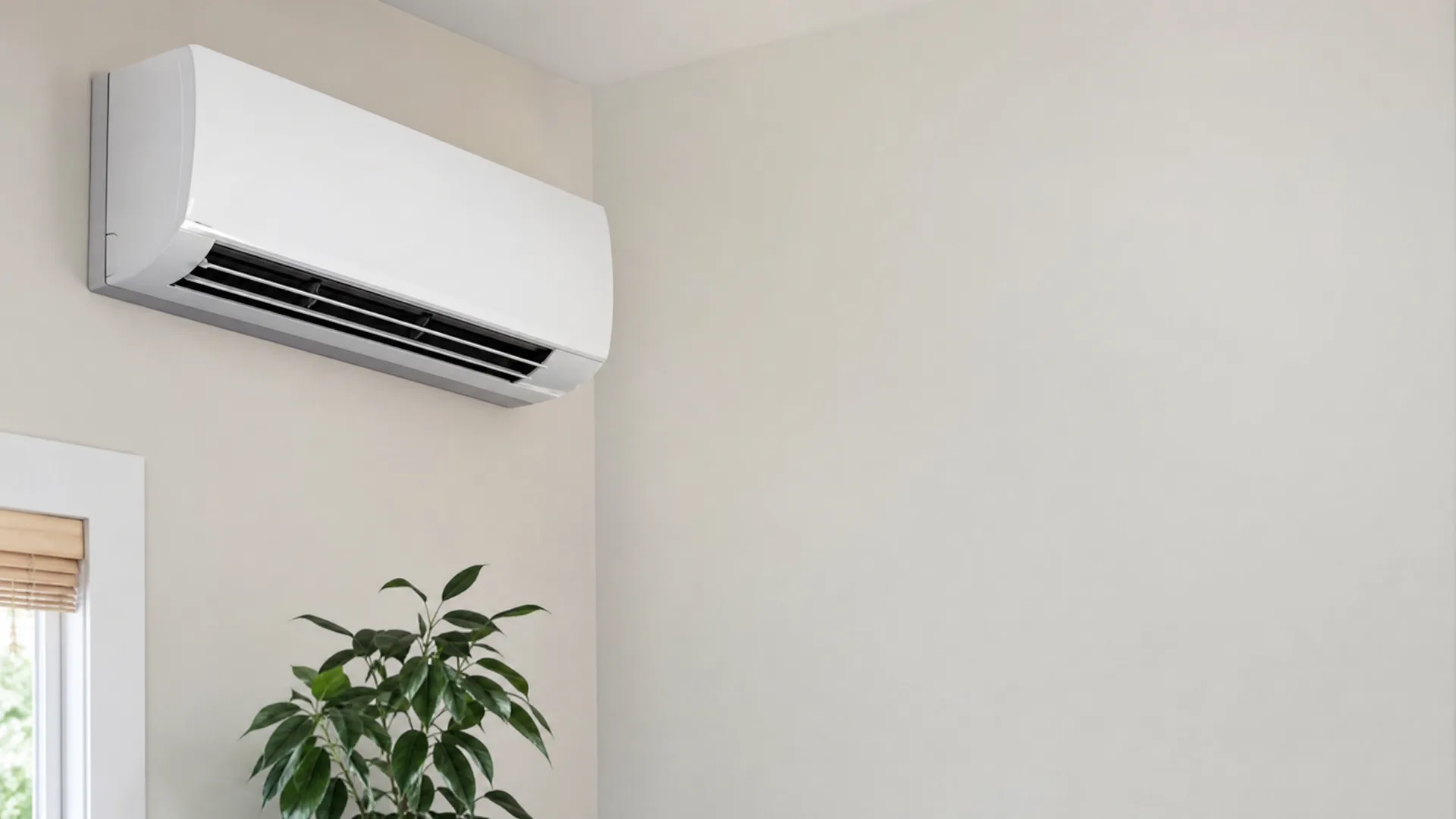
Why the smell shows up now
All summer your mini split ran in cooling mode, and condensation sat on the indoor coil. Dust, pollen, and whatever else was in the air stuck to that wet coil and dried there once you stopped running it. Switch over to heat and air passes over that same coil again, picking up whatever grew on it while it sat idle. That is the musty smell. A burning smell is different and points to dust baked onto a heating element or a wiring problem, not the coil.
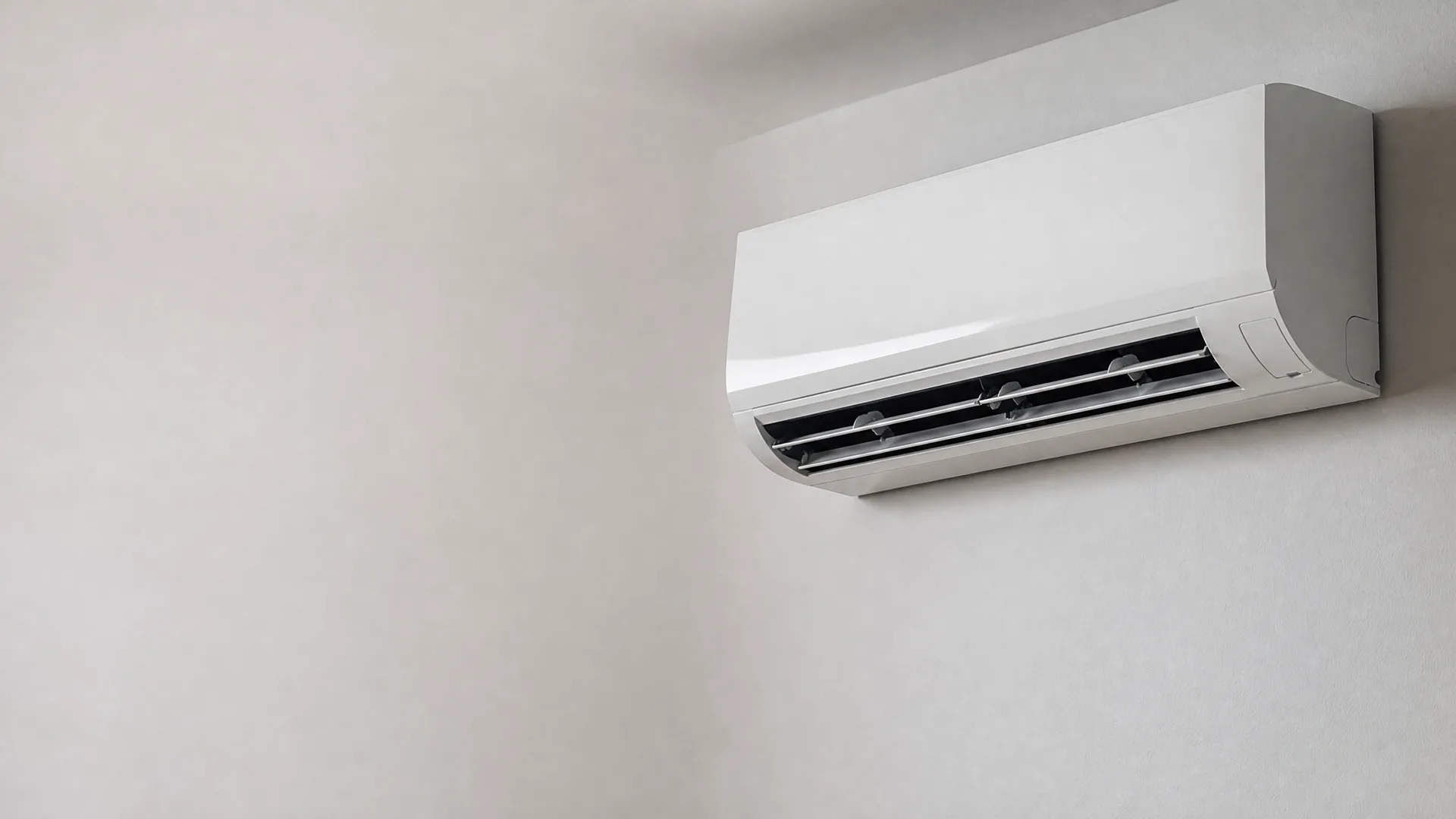
What a dirty filter adds to it
The filter sits right behind the front panel and catches what the air carries before it reaches the coil. If it has not been pulled out and rinsed since spring, everything it trapped over months of cooling is still sitting there, and heated air pushes that smell straight into the room. A filter this dirty also slows the airflow across the coil, which gives mold and mildew more of a chance to settle in before the air moves past.
Smell That Fades vs. Smell That Doesn't
Musty smell
- This usually means mold or mildew growing on the indoor coil or inside the drain pan from summer condensation that never fully dried out.
- It fades after an hour or two of the unit running, once the coil dries out and dust stops burning off.
- A clogged or sloped-wrong drain line can leave standing water in the pan all winter, so the smell keeps coming back.
- Running the fan-only mode for a few minutes before you leave in fall helps dry the coil out before the smell has a chance to set in.
- If it comes back every time you switch to heat, the filter or coil likely needs a cleaning a homeowner can't easily do themselves.
Burning smell
- Dust sitting on the heating element or electrical contacts since spring will singe off within the first few minutes of heat mode and then stop.
- A smell that doesn't fade, or smells like hot plastic, points to a wiring issue or a motor working harder than it should.
- Idaho winters push a mini split to run longer stretches of heat than cooling ever did in summer, so a marginal part shows itself now.
- Breaker trips or a burning smell that holds steady are reasons to shut the unit off until someone licensed looks at it.
- Gas furnaces are the main heat source in most Idaho homes, so a mini split used for heat is often newer or less run-in, and an odd smell is worth having checked rather than waited out.







You're at your desk working from home, mid afternoon, and the heat kicks on because you felt that first cool snap coming through the window. A few minutes later you look up and see it: a wet streak running down the wall under the indoor unit, soaking into the paint above your desk. You grab a towel off the bathroom rack and drop it on the floor under the drip, and you stand there for a second just watching it darken. Outside it's still warm enough for shorts. You're not thinking about the smell anymore, you're thinking about the wall, and about who you'd even call for something like this that actually knows mini splits and not just furnaces.
A mini split pro near you

Only one pro gets your request, so you hear from one company.
You only hire the pro if you want to.

Summer dew points here average 42°F, according to NOAA climate data, which is on the dry side. That dry air helps your mini split's indoor coil actually dry out between cooling cycles instead of staying damp. But a coil that got coated in dust and pollen over the summer can dry with that buildup baked onto it, and once you switch to heat, that's what you're smelling. The dry air doesn't cause the smell. It just means mold is less likely to be the cause here than dust and debris sitting on a coil that never got cleaned.
NASA POWER T2MDEW county cells weighted by homes


Inside the indoor unit, air gets pulled across the coil and through the blower wheel before it ever reaches the louvers. Whatever is sitting on those parts goes right along with the air into your room. The coil and the blower wheel don't smell the same way. A dusty blower wheel smells dry and dusty. A coil with mold or mildew on it smells musty, closer to a damp basement. Idaho's dry summers keep mold from spreading as fast as it would somewhere humid, but a dirty filter still lets enough dust and pollen through to build up on the coil underneath. All that sat there through summer while the coil ran cold and wet with condensation. Switch over to heat and that same coil turns warm, which speeds up whatever is growing on it. The drain pan underneath catches the runoff from the coil, and once the unit sits idle, any water left in it goes stagnant. A technician looks at the coil, the blower wheel, and the drain pan separately, since clearing out one and skipping the others just means the smell comes back.
What's actually causing that smell
- The indoor unit pulls air across the coil, through the blower wheel, and out the louvers, so anything growing on those surfaces rides along with the air.
- A blower wheel with months of dust stuck to its blades throws off a different smell than the coil does, often dustier and less musty.
- Idaho's dry summers mean less time for mold to take hold, but a clogged filter still traps enough pollen and dust to coat the coil underneath it.
- The drain pan sits right under the coil and collects whatever condensation drips off it, and standing water there turns stagnant fast once the unit sits idle.
- Switching from cooling to heat reverses the refrigerant cycle, so the same coil that was cold and wet all summer is now warm, and warmth speeds up whatever is growing on it.
- A technician checks the coil, the blower wheel, and the drain pan separately, because cleaning one and missing the others leaves the smell behind.


Run it on fan only for twenty minutes before you switch to heat. That dries out any damp spots on the coil and can clear a mild musty smell on its own before the heat ever kicks it up into the room.
If the smell is sharp or electrical, running the fan first won't fix it and isn't worth the time. That points to something at the heating element or wiring, and it needs a technician who services mini splits to look at it before you run the unit again.
Power costs 11.83 cents per kilowatt-hour statewide
At 11.83 cents per kilowatt-hour, running your mini split's blower on fan mode for a while to dry out the coil costs you next to nothing. Most Idaho homes heat with gas anyway, so the mini split likely isn't your main heat source. That makes it worth a proper look rather than living with the smell until spring.
EIA-861 2025 statewide residential average
A mini split that smells musty or sharp when you switch it to heat is telling you something specific got coated on the coil or the blower wheel over the summer, and running the fan alone will only clear the mild cases. If the smell lingers past an hour or carries any hint of burning, that's not something to keep running on and hope it works itself out. Someone who services mini splits all through an Idaho winter has seen this exact complaint plenty of times and knows whether it's a coil that needs cleaning, a drain pan holding standing water, or wiring that needs a closer look before you run the unit again. When you request a repair here, you're matched with one licensed local contractor rather than a handful of companies competing for your callback, so the person who reaches out is someone who actually works on this equipment in this climate, not a dispatcher reading off a list. You'll know the smell by now. What's left is having someone qualified tell you which one it is.

A local pro for your mini split repair
Asking costs nothing, and the choice to hire stays yours.
A mini split that keeps smelling off every time the heat kicks on isn't going to fix itself by spring. Getting a local contractor to look at the coil and blower now means you're not still smelling it in January, and you're not standing in a cold house if the problem turns out to be bigger than dust.