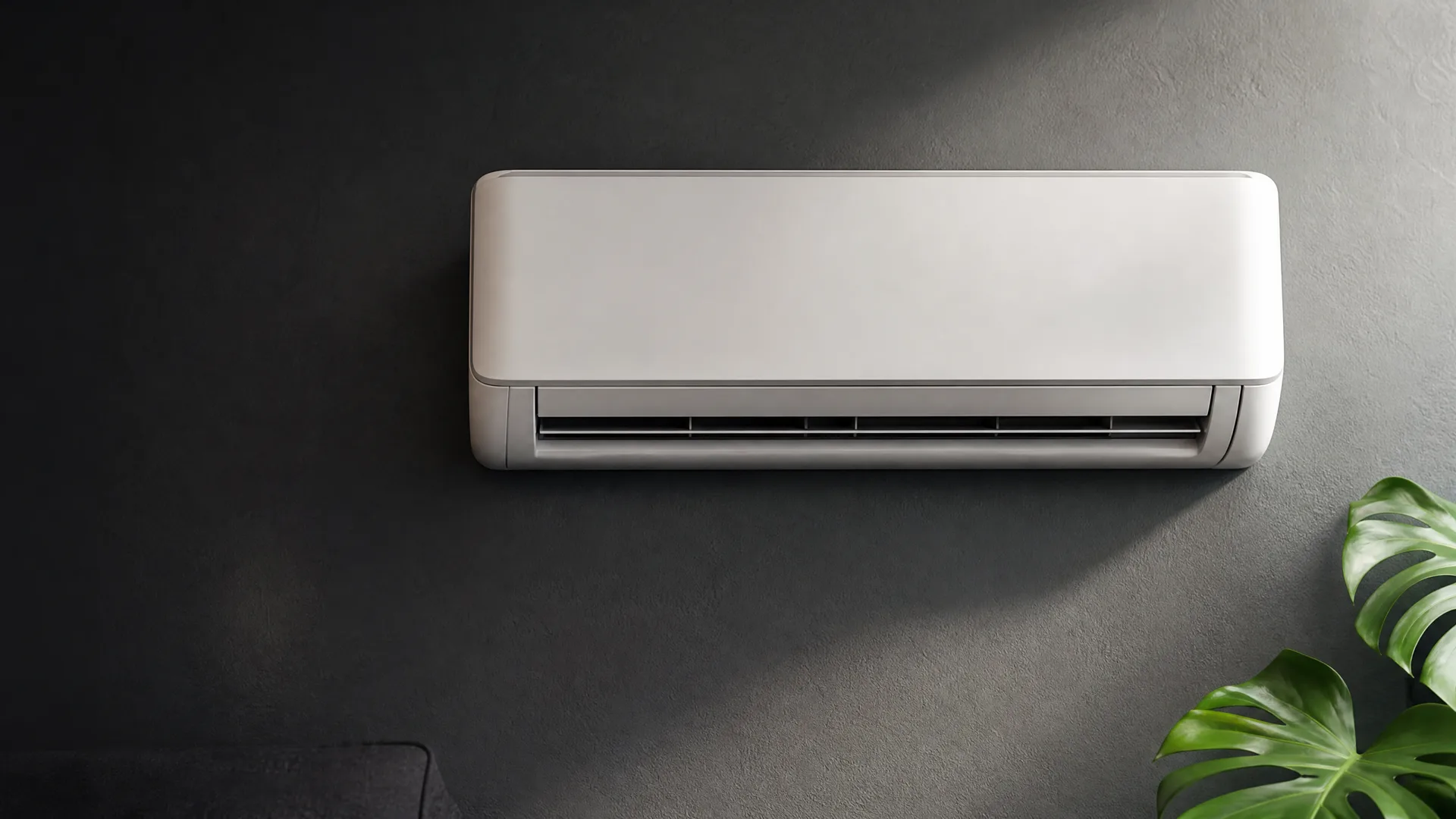
Why your mini split leaks water in an Idaho winter
Skip searching for a mini split pro and answer a few questions instead.
A mini split dripping water in the middle of winter catches you off guard, especially in Idaho where you'd expect any water problem to show up as ice, not a puddle on the wall or floor below the indoor unit.
In heating mode, that unit is pulling moisture out of the air just like it would in cooling mode, and the water it collects has to drain out through a condensate line. When that line is clogged, frozen, or sloped wrong, the water backs up and finds another way out, usually down the wall under the unit.
It can also mean the drain pan inside the unit has cracked, or the line itself has ice built up in a section that runs outside or through an unheated space. Either way, it's not something to wait out. Water running down an interior wall all winter will find the drywall and the framing behind it eventually.
Finding someone who actually works on mini splits, rather than just furnaces and central air, can turn into its own project. You call around, explain the dripping, the location of the unit, whether it's running heat or cooling, and then wait on a quote, then do it again with the next company to see if the price or the schedule is any better. By the time you've talked to three contractors you've told the same story three times and you still don't have anyone on the calendar.
This page connects you with one licensed Idaho contractor who works on mini splits through the winter here and knows how these condensate lines behave when the temperature drops below freezing. You're not fielding calls from five different companies trying to win the job. You tell them what you're seeing, they come look at the line, the pan, and the slope of the unit, and you get an answer instead of a guess.
A mini split that drips water in winter is usually icing up outside, not leaking inside. In Idaho's cold, dry winter air, the outdoor unit's coil can frost over as it pulls what little heat is in that air. The system runs a defrost cycle to melt that frost off, and the water from it has to go somewhere. If the drain line is clogged, cracked, or frozen itself, that meltwater backs up instead of draining away, and it shows up as a puddle under the indoor unit or water running down the wall. A tilted indoor unit or a drain pan that's cracked or full of algae can do the same thing. None of this means the system is broken beyond use, but it does mean something in the condensate path isn't doing its job, and it needs a look before the leak damages your wall, floor, or the unit itself.
Power costs 11.83 cents per kilowatt-hour statewide
At 11.83 cents a kilowatt-hour, running the mini split through a defrost cycle or two costs you little. That's why a tech who comes out to fix a water leak isn't going to tell you to just switch over to gas heat and skip the repair. The cheap power here means it's worth fixing right, not working around.
EIA-861 2025 statewide residential average
The leak is inside the house
Water shows up on the wall or floor under the indoor unit itself, not just outside near the compressor. That points to the drain line or the drain pan inside, not the defrost cycle. A clogged condensate line, a pan that's cracked, or a line set that was never insulated right can all send water into the room instead of outside where it belongs. This kind of leak doesn't care how cold it is outside. It'll show up in July the same as January, because it's not about frost or defrost at all. It's about where the water goes once the unit makes it.
The leak only happens in winter
If the dripping only starts when temperatures drop and the unit is heating, that's the defrost cycle doing its job, then losing the water somewhere it shouldn't. The outdoor unit frosts up, the system melts that frost to clear the coil, and the meltwater is supposed to drain away outside. When the drain path outside is blocked, frozen over, or pitched wrong, that water backs up or runs somewhere you can see it. A tech who's worked on mini splits through an Idaho winter has seen this exact pattern before and knows which part of the outdoor unit to check first.
A clogged drain line or a cracked pan isn't something you fix by watching a video and hoping. Someone has to get the indoor unit's cover off, find where the line is blocked or where the pan has failed, and know whether the fix is a cleared line or a new pan. That's a trip you'd otherwise spend finding: searching for someone near you who actually works on mini splits, not just central furnaces, calling a few, explaining the same drip and the same puddle each time, then weighing quotes that don't describe the same job. Ask here and the request goes to one contractor, local to Idaho, who services this equipment through winters like this one and has seen this exact leak before. No comparing bids from five companies, no retelling the story to each one. Just the person who already knows what a mini split leaking indoors in January usually means, looking at yours.
You're at your desk working in the home office that afternoon, the mini split blowing cool air behind you, when you catch movement out of the corner of your eye. A dark streak is working its way down the wall under the indoor unit, slow enough that you almost miss it. By the time you get up to look, it's already reached the baseboard. You grab a towel from the hall bathroom and press it against the wall, then fold another on the floor to catch what's dripping off the unit itself. Outside it's dry, the kind of heat that cracks the yard, and you keep thinking there's no reason for this much water to be coming from anywhere.
What's that stain spreading under your mini split?
You'll likely notice it on the wall first, a water mark growing under the indoor unit, or a drip landing on the floor or the windowsill below it. Sometimes it's a sound instead, a steady tick of water hitting something it shouldn't. Run your hand along the wall near the unit and it may feel damp even where you can't see a mark yet. Check inside the unit's cover and you might find the drain pan holding water instead of draining it away. Left alone, that water finds its way into the drywall and the framing behind it, and once it's in there, drying it out takes more than wiping the wall.
That winter leak traces back to the air your mini split handled all summer. Idaho air in June, July and August carries a dew point around 42°F, which is dry compared to muggier states, but the indoor coil still pulled moisture out of the air every time it ran cooling. That moisture had to go somewhere, down the same drain line and pan that clog or crack over time. A line that was draining fine in July can be partly blocked by the time cold weather hits, and you won't see it until the unit's running heat and that water or defrost melt has nowhere to go but onto your wall or floor.
NASA POWER T2MDEW county cells weighted by homes
Check It Yourself or Call Someone
Fixing it yourself
You can pull the indoor unit's filter and rinse it, which helps airflow but does nothing for a cracked pan or a blocked drain line.
Finding where the drain line is blocked means getting the cover off the indoor unit, and putting it back on wrong can start a new leak.
A wet-dry vacuum at the outdoor drain point sometimes clears a simple clog, but it won't tell you if the pan itself has split.
If the leak is actually the defrost cycle working outside, nothing you do indoors will change that, and you've spent the afternoon on the wrong problem.
Without knowing which of the two it is, you risk opening up the unit, finding nothing wrong with the part you checked, and the stain comes back in a week.
Calling a contractor
A local tech who services mini splits through Idaho winters has likely seen this same stain on a wall under an indoor unit before.
They can tell within minutes whether it's a defrost cycle doing its job outside or a drain line and pan problem inside.
You call once and one licensed contractor handles it, instead of fielding calls back from several companies you had to phone around to find.
They already carry the parts a drain pan repair usually needs, so there's no separate trip to figure out what's broken before fixing it.
You explain the stain and when it started one time, to the person who's going to open the unit and look, not to three different people first.
Before you get your mini split repairAfter you get your mini split repair
1
The outdoor coil pulls heat from cold air and frost forms on it.
2
A sensor detects the frost buildup and starts a defrost cycle.
3
The system briefly reverses to blow hot refrigerant through the outdoor coil.
4
Melted frost drains out of the outdoor unit as water or steam.
A leak has a reason, and the reason has a fix
Water under your mini split in an Idaho winter comes from one of two places. Either the outdoor unit is going through a normal defrost cycle and the melt is draining somewhere you can see it, or the indoor drain line is clogged, the pan is cracked, or the line has come loose, and water is finding its way onto your wall or floor instead of outside where it belongs. Knowing which one you have, and dealing with it before it reaches your floor or drywall, is what keeps the house comfortable for whoever's in it.
A local contractor who services mini splits all year knows the difference between normal defrost runoff and an indoor leak before they even pull the cover off, because they've seen both in homes near you. That's one call instead of several, no explaining the dark streak on the wall twice to two different companies, no sorting through quotes that all describe the problem differently. Just someone who knows this equipment looking at yours.