Why your mini split blows cold air in Idaho

A white wall-mounted mini-split air conditioner indoor unit shown straight-on against a plain light gray background.
Skip the calls

A mini split blowing cold air when you want heat usually means it's stuck in cooling mode, or the reversing valve that switches it between heating and cooling is failing. Check the mode setting on the remote first. If it's set to heat and cold air is still coming out, the valve itself is the likely cause, or the unit has lost refrigerant charge and can't move enough heat from outside. In Idaho winters, this matters fast. A mini split that can't heat properly will run constantly trying to catch up, and in cold weather that strain can push a struggling system toward a bigger failure. Most homes here lean on gas for heat anyway, so a mini split acting up might just mean living without it in a room that counted on it. Either way, cold air on a heat setting is not something that fixes itself with time.

A white wall-mounted mini-split air conditioner installed high on a light gray interior wall below a white crown molding and ceiling with a recessed light.
Set to heat, and the air coming off the unit is warm within a minute or two of the compressor kicking on.
A dusty, discolored white wall-mounted mini-split air conditioner unit installed on a plain beige interior wall below a molding strip.
Set to heat, but the vents keep pushing cold air and the case shows years of dust baked onto the plastic.

The switch between heat and cold happens at the reversing valve, a small solenoid-controlled valve that redirects refrigerant depending on which mode you've chosen. Power the solenoid one way and the system heats. Power it the other and it cools. When that solenoid sticks or loses power partway, the valve can hang between the two positions, and the indoor unit keeps acting like it's still set to cool no matter what the remote says. Not every blast of cold air means something's wrong, though. Outdoor units run a defrost cycle in winter to clear frost off the coil, and for a few minutes during that cycle, cold air can come through the vents before it switches back. If the cold air doesn't stop, the cause might be lower down the chain. A low refrigerant charge won't let the indoor coil get warm enough to heat the air moving across it. A failing thermistor can tell the control board the coil is already warm when it isn't. And a coil caked with dust transfers heat poorly no matter how well everything else is working.

What's Actually Happening Inside the Unit

  • A reversing valve uses a sliding core and a small solenoid coil to redirect refrigerant flow between heating and cooling.
  • When the solenoid loses power or sticks, the valve can hang halfway, leaving the system cycling as if it were still in cooling.
  • The outdoor unit's defrost cycle can briefly send cold air inside during winter, which is normal and lasts only a few minutes.
  • A low refrigerant charge keeps the indoor coil from reaching the temperature needed to warm the air passing over it.
  • The thermistor that reads coil temperature can fail or drift, telling the control board the air is warm when it isn't.
  • Dust and grime packed into the indoor coil block heat transfer the same way a dirty furnace filter blocks airflow.
A smiling woman with dark shoulder-length hair in a cream V-neck sweater sits at a marble counter with a glass of red wine, with a kitchen and softly lit living room behind her.
A woman in a dark green sweater laughs while seated at a marble kitchen island with a glass of red wine, with open shelving, cabinets and a living room visible behind her.
A woman with long dark hair in a cream knit sweater laughs while looking off to the side, seated at a counter with a glass of red wine, in a dimly lit living room with a sofa, lamp, framed pictures and houseplant behind her.
A smiling woman with long dark hair in a beige sweater sits at a marble kitchen counter with a glass of red wine, with a dimly lit living room behind her.

What happens when the valve sticks

When the reversing valve hangs halfway, the compressor still runs but the indoor coil keeps acting like it's cooling. You'll get airflow, the fan sounds normal, and the thermostat shows the unit calling for heat, but the coil temperature never climbs. A contractor checking this will feel the two refrigerant lines at the outdoor unit. On a working system in heat mode, one line runs noticeably warmer than the other. When the valve is stuck, both lines read close to the same temperature, which points straight to the valve instead of the thermostat or the remote.

Why defrost cycles get blamed

Idaho winters push outdoor coils into frost, and the mini split switches briefly into cooling mode on purpose to melt that frost off before switching back to heat. During that minute or two, the indoor vents blow cold air, and that's normal. The problem is a unit that stays in that mode, or keeps returning to it, instead of finishing the defrost and switching back. A healthy system completes a defrost cycle in a few minutes. One that doesn't return to heat afterward has a stuck valve or a control board that isn't sending the signal to switch back.

A dusty, discolored white wall-mounted mini-split air conditioner unit installed high on a plain interior wall below a white ceiling molding.
Before you get your mini split repair
A white wall-mounted mini-split air conditioner on a beige interior wall, with a cream curtain and window at left, a potted plant on a ledge at right, and a wood floor below.
After you get your mini split repair

Skip calling around

Your request goes to one pro, not a list of companies.

There's no charge for the request.

Gas heat picks up the slack when the mini split won't, but it wasn't sized to run your whole house by itself, and you'll feel the rooms it doesn't reach.

Power is cheap here, so the mini split running wrong doesn't hit your bill the way it might elsewhere. It's the cold room you're paying for, not the kilowatts.

A smiling bearded man in a navy sweater sits at a candlelit dinner table with a glass of red wine, a bowl of salad, and plates of food in the foreground.
A woman with dark hair in a bun reclines on a sofa with her eyes closed, wrapped in a cream fleece blanket, a closed blue hardcover book resting in front of her, with a lit lamp and a vase of dried flowers in the background.

Other Reasons Cold Air Keeps Coming

  • The outdoor unit's defrost cycle can briefly send cold air inside even when the system is working right.
  • A failed thermistor near the indoor coil can tell the control board the wrong temperature and keep it in the wrong mode.
  • Low refrigerant charge keeps the reversing valve from building enough pressure difference to fully shift position.
  • A dirty outdoor coil in winter forces longer defrost cycles, which means more cold air blowing through your vents.
  • Some remotes lose sync with the indoor unit, so the display shows heat while the board is still running the last cooling command.
  • A stuck check valve inside the reversing valve assembly lets refrigerant leak back the wrong way during the switch.

A failing reversing valve isn't the only reason heat mode turns into cold air. Every mini split defrosts its outdoor unit periodically in cold weather, melting off the frost that builds on the coil, and for a minute or two during that cycle it can push cool air inside even though nothing is actually wrong. That's normal. What's not normal is a defrost cycle that runs long or runs often, and that usually traces back to a dirty outdoor coil struggling to shed frost, which drags the cycle out and sends more cold air through your vents than it should.

There are other parts that can cause this too. A thermistor sits near the indoor coil and reports its temperature to the control board. If it's failed or reading wrong, the board can hang onto the wrong mode no matter what the remote says. Refrigerant charge matters as well. The reversing valve needs a real pressure difference across it to slide into position, and if the system is low on refrigerant, the valve may start to move and stop halfway. Even the remote itself can be the problem. Some lose sync with the indoor unit's board, so the display shows heat while the unit keeps running whatever it was last told to do. A technician checking a system like this works through these one at a time, starting with what's easiest to test.


Power costs 11.83 cents per kilowatt-hour statewide

At 11.83 cents a kilowatt-hour, running your mini split doesn't cost much even when it's stuck cycling wrong. That's why a stuck reversing valve can sit unnoticed for weeks here. You'll feel the cold air before you ever see it on your power bill.

EIA-861 2025 statewide residential average

  1. You set the thermostat to call for heat.

  2. The control board sends power to the reversing valve's solenoid.

  3. The valve's sliding core should shift to redirect refrigerant flow.

  4. A stuck core leaves the indoor coil acting like it's cooling.

Why does my house feel cold with the heat on

You've probably bumped the thermostat up a few times already and stood by the vent waiting for it to change. The air stays cool, the unit keeps running, and the room never quite warms up. Some of you have noticed the gas furnace kicking on more than it used to, covering rooms the mini split used to handle on its own. Others have caught a faint burning smell near the indoor unit, or heard it short cycling, shutting off and restarting within minutes. None of this fixes itself. Left alone, a stuck reversing valve can put strain on the compressor, and the part that's failing now is cheaper to replace than the one it can take down with it.

Single-story house with tan horizontal siding and a dark shingled hip roof, fronted by a patchy green and brown lawn and a concrete walkway leading to the covered entry.

Idaho summer air is dry. Averaged across homes here, the dew point runs 42°F in June, July and August, which is the kind of air that feels light even at 90 degrees outside. That dryness is also why cold air coming out of a mini split stuck in the wrong mode is so easy to notice. There's no mugginess to mask it. The moment that reversing valve hangs and the indoor coil keeps acting like summer, the air hitting your skin feels sharper and colder than it should for a system that's supposed to be heating the room. You'll feel it fast, not guess at it for days.

NASA POWER T2MDEW county cells weighted by homes

A closed laptop and a cream mug of coffee on a coaster sit on a dark wooden table, with a potted plant at left and a kitchen counter, tiled backsplash and shelf of ceramics in the background.

A mini split blowing cold air in heat mode needs a diagnosis, not a thermostat reset

You've checked the remote, you've watched the vents, and the air is still cold when it should be warm. That points to a reversing valve that won't shift, or a thermistor feeding the control board bad information. Either way it's a repair, not something you fix by changing settings or waiting it out.

Finding someone who works on mini splits isn't the same as finding someone who works on a furnace, and calling around to ask who handles these systems takes evenings you don't have. A local contractor who services this equipment every season already knows what tends to fail in a unit cycling wrong like yours, and you'll only hear from the one.

A living room corner with a light beige sofa holding a textured taupe cushion, a large ceramic vase of olive branches by a window, a framed neutral artwork on the wall, and a dark bowl with stacked books in the foreground.
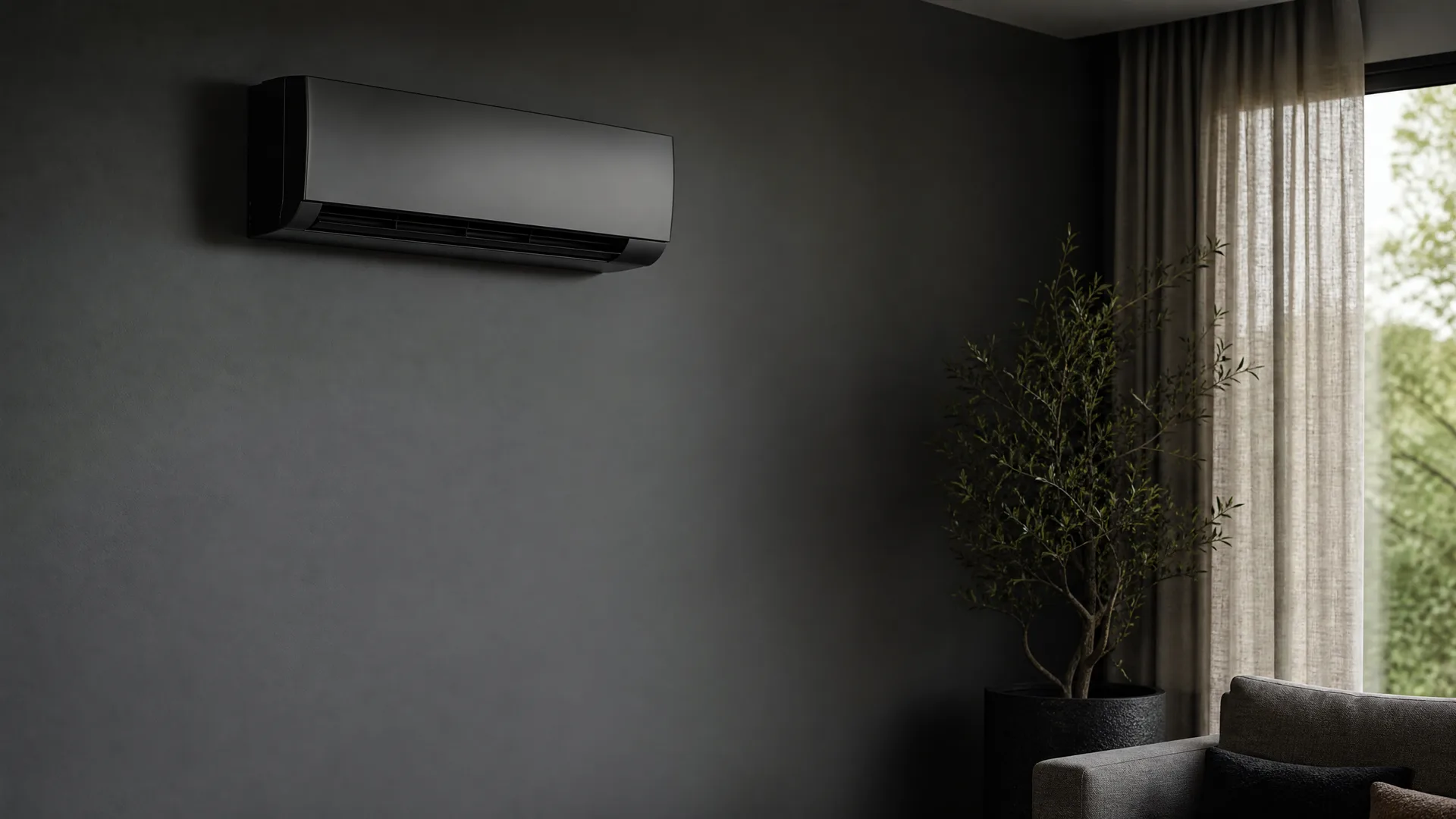
A dark wall-mounted mini-split air conditioner on a gray interior wall, with a potted olive-like tree, sheer curtains over a window showing green foliage, and a gray sofa in the lower right corner.

Describe it once

The pro who reaches out is licensed in Idaho.

Step 1 of 3: Equipment