Tell us about the job
Takes about a minute. No obligation.
Sizing a mini-split for Twin Falls County starts with what the compressor actually faces: not sustained heat load through most of the calendar, but a tight window of real work followed by months of standstill. Homes in Twin Falls County, ID run cooling about two months a year, from July through August. A compressor that sits dormant for most of the year is vulnerable to a different set of failures than one that runs continuously, and a contractor who ignores that when selecting equipment leaves the homeowner with a system that struggles on its first call of the season. Refrigerant charge, coil condition, and electrical connections all want verifying before that startup, because a fault that developed during the idle period will surface on the first hot day, when the system has no margin to hide it.
Electrical panels in houses built for an earlier generation of heating and cooling were sized around smaller loads, and a mini-split draw can push past what those panels were wired to carry. Half the homes in Twin Falls County, Idaho were built in 1982 or earlier (2020-2024 ACS 5-year). That gap between what the house was built for and what a new unit needs is where installation decisions get made: a contractor has to assess the panel before anything else is priced. Some houses will need a service upgrade before the equipment question is even relevant.
The Parts of a Mini-split System and What Gets Assessed
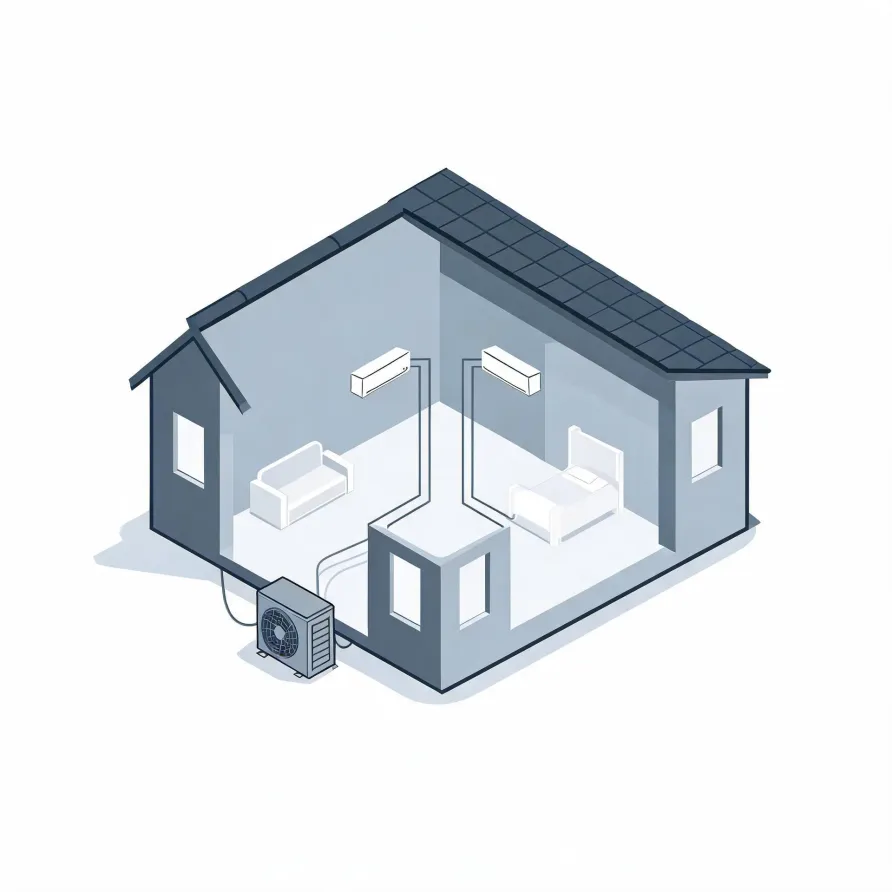
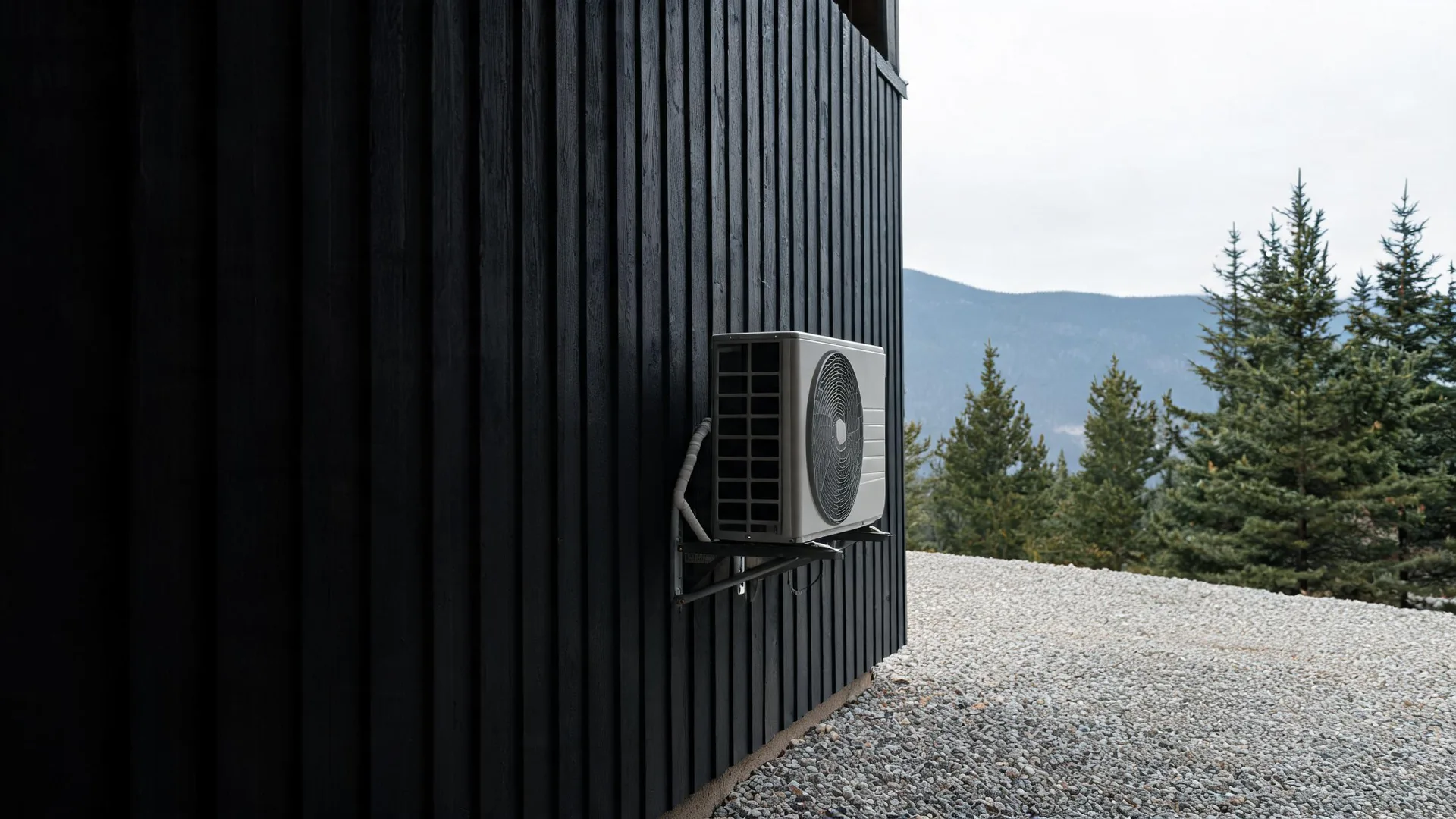
The indoor air handler mounts high on a wall inside the room being served, pulling in room air and pushing conditioned air back out. The outdoor condenser unit sits on a pad or bracket outside the house, housing the compressor and the components that move heat between indoors and out.
A refrigerant line set runs through a small penetration in the wall to connect the two units, carrying refrigerant between them. A condensate drain line runs from the indoor unit to carry away moisture, and a dedicated electrical circuit feeds the outdoor unit from the panel.
The drawing shows a typical layout, and a licensed contractor determines exactly how each piece applies to your house.
Get matched in Twin Falls CountyTwin Falls County, by the Numbers
58 severe weather events were recorded in Twin Falls County, Idaho between 2015 and 2024.
NOAA National Centers for Environmental Information, Storm Events Database, bulk CSV export, events 2015-01-01 through 2024-12-31.Half the homes in Twin Falls County, Idaho were built in 1982 or earlier (2020-2024 ACS 5-year).
U.S. Census Bureau, 2020-2024 American Community Survey 5-Year EstimatesTwin Falls County, Idaho holds 36,429 housing units (2020-2024 ACS 5-year).
U.S. Census Bureau, 2020-2024 American Community Survey 5-Year EstimatesOwners occupy 70.5% of the occupied homes in Twin Falls County, Idaho (2020-2024 ACS 5-year).
U.S. Census Bureau, 2020-2024 American Community Survey 5-Year EstimatesCodes & Standards Governing Mini-Split Installation in Twin Falls County, Idaho1 sourced rules and standards
Licensing Rules for HVAC Work in Twin Falls County, Idaho
Idaho requires a state certificate of competency for heating, ventilation and air conditioning work: it is unlawful to engage in the business, trade or practice without passing the examination and holding the certificate.
Severe Weather Events in Twin Falls County by Year
The climate a building sits in sets the workload for every heating and cooling system inside it. A mini-split sized and installed for local conditions handles that workload without being asked to do more than it was built for.
58 severe weather events, 2015–2024. Source: NOAA National Centers for Environmental Information, Storm Events Database.