Tell us about the job
Takes about a minute. No obligation.
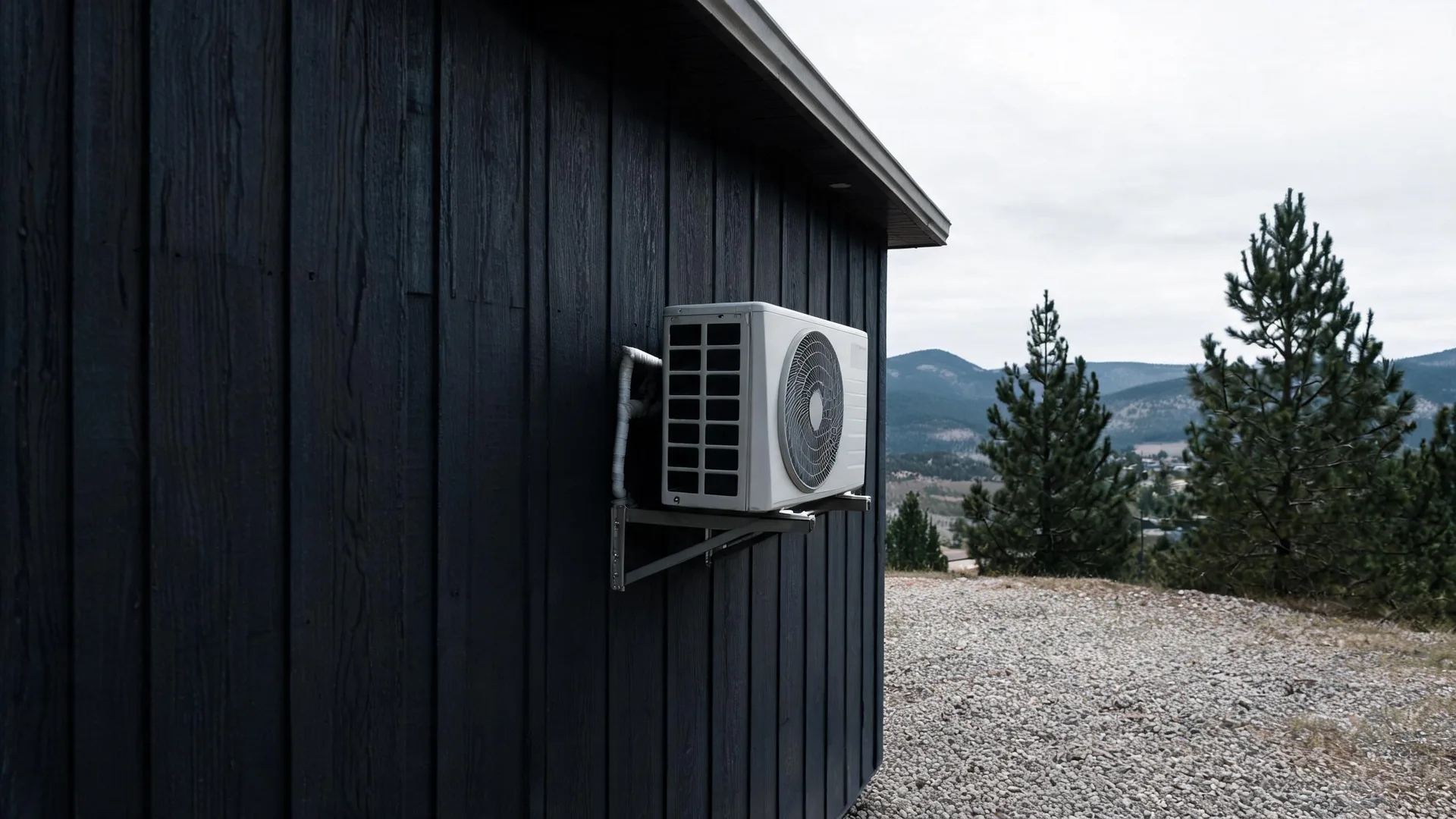
Sizing a mini-split in Power County starts with the heating side, because the cooling load tells you almost nothing about what the system will be asked to carry through winter. Homes in Power County, ID run cooling in a single month of the year, July. The compressor and condenser fan log minimal cycling hours against that cooling window, so wear from summer work is not where a contractor looks when choosing capacity or projecting service intervals. What drives the sizing conversation is how far outdoor temperatures drop and whether the unit's rated output holds at those lows, which in southern Idaho is the question that determines whether supplemental heat belongs in the quote.
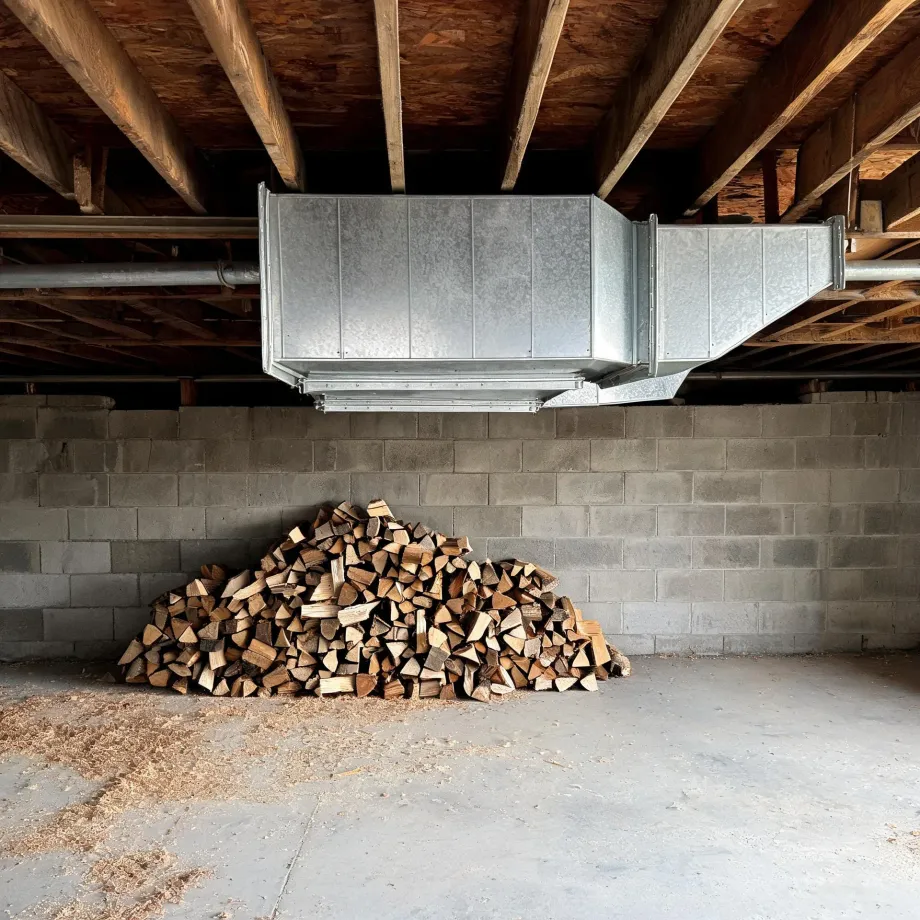
Ductwork and electrical panels in a house tell a contractor more about the installation scope than the equipment spec does. Half the homes in Power County, Idaho were built in 1975 or earlier (2020-2024 ACS 5-year). Service panels from that era were designed around a smaller total load, and a mini-split addition often pushes against what the existing wiring will support. That is not a theoretical concern; it is what determines whether a straightforward installation stays straightforward or picks up an electrical upgrade along the way.
The Parts of a Mini-split System and What Gets Installed
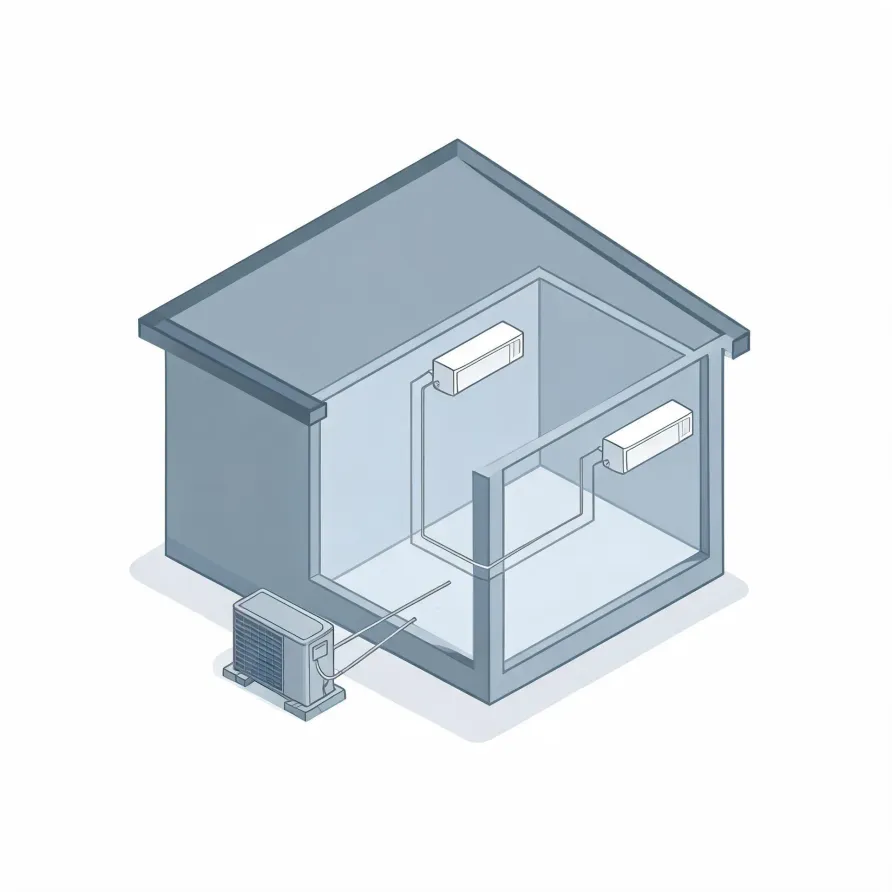
The indoor air handler mounts high on a wall inside the room being conditioned, where it draws in room air and delivers treated air back out. The outdoor condenser unit sits on a pad or bracket outside the house and holds the compressor and the components that do the system's heavy lifting.
A refrigerant line set runs through a small hole in the exterior wall, connecting the indoor and outdoor units, and a condensate drain line carries moisture from the air handler to the outside. A dedicated electrical disconnect is mounted near the outdoor unit and ties into the circuit a contractor runs from the panel.
The drawing shows a typical layout, and a licensed contractor determines what the installation looks like for this specific house and its existing conditions.
Find a contractor in Power CountyPower County, Idaho, by the numbers
187 severe weather events were recorded in Power County, Idaho between 2015 and 2024.
NOAA National Centers for Environmental Information, Storm Events Database, bulk CSV export, events 2015-01-01 through 2024-12-31.Half the homes in Power County, Idaho were built in 1975 or earlier (2020-2024 ACS 5-year).
U.S. Census Bureau, 2020-2024 American Community Survey 5-Year EstimatesPower County, Idaho holds 2,966 housing units (2020-2024 ACS 5-year).
U.S. Census Bureau, 2020-2024 American Community Survey 5-Year EstimatesOwners occupy 73.7% of the occupied homes in Power County, Idaho (2020-2024 ACS 5-year).
U.S. Census Bureau, 2020-2024 American Community Survey 5-Year EstimatesCodes & Standards Governing Mini-Split Installation in Power County, Idaho1 sourced rules and standards
Licensing and Legal Requirements in Power County, Idaho
Idaho requires a state certificate of competency for heating, ventilation and air conditioning work: it is unlawful to engage in the business, trade or practice without passing the examination and holding the certificate.
Severe Weather History in Power County
Weather in this part of Idaho puts real demands on heating and cooling equipment, and those demands shape what a mini-split system needs to handle year after year. Sizing and installation choices that work elsewhere may fall short here, which is why local weather history matters to this kind of work.
187 severe weather events, 2015–2024. Source: NOAA National Centers for Environmental Information, Storm Events Database.