A white wall-mounted mini-split indoor unit on a gray interior wall above a beige sofa, with a framed picture, a floor lamp, wood slat wall trim, and a window showing green foliage.

A pro who works on mini splits

Is a mini split cheaper than baseboard heat in Idaho

A mini split and baseboard heat cost different amounts to run, and in Idaho, with cheap power and gas as the common choice, the comparison depends on which one is actually heating your home now. This page gets into what drives the difference. If you want help sorting out your own setup, a contractor can look at what you have and what it's costing you.

Match me with a pro

Yes, a mini split almost always costs less to run than baseboard heat, and by a wide margin. Baseboard heaters work by resistance, where electricity turns straight into heat, one unit of power in for one unit of heat out. A mini split instead moves heat from the outside air into your home, and for every unit of power it uses, it can deliver two to three units of heat. That difference holds in Idaho winters as long as the outdoor air isn't brutally cold, since a mini split loses some of that advantage as temperatures drop. Power here is cheap, which narrows the gap in dollar terms compared to places with expensive electricity, but the mini split still comes out ahead per hour of heating. If your home still has baseboard heaters running somewhere, replacing them with a mini split is where the savings show up.

A dusty, stained white wall-mounted mini-split air conditioner indoor unit installed high on a plain off-white interior wall near the ceiling.
Before you get your mini split installation
A white wall-mounted mini-split air conditioner unit installed high on a beige interior wall below white crown molding, with a window and woven shade at the left edge showing green foliage outside.
After you get your mini split installation

Why does that one room still feel cold?

If your mini split handles one room and baseboard heat covers the rest of the house, you already know the split. The mini split room feels warm fast and stays even. The baseboard rooms take longer to come up to temperature, and the heat feels different, drier, more uneven near the windows. Check your power bill against months before you had the mini split. If the baseboard circuits are still carrying most of the load, you're paying resistance rates for most of your square footage while one room runs cheap. That gap shows up every month it stays this way, and it only grows if you add more baseboard rather than extending the mini split to cover more of the house.

A white wall-mounted mini-split air conditioner on a beige interior wall, with a window at left showing trees and a wooden fence, and dark wood flooring below.

Mini split carrying the load

This is the room your mini split actually heats. It warms fast and holds steady, and it costs less per hour than the baseboard heater it replaced. Set the thermostat and leave it. The room by the window stays even even when it's cold outside.


A white wall-mounted mini-split air conditioner indoor unit with dark louvered vents, installed near the ceiling on a beige wall below white crown molding.

Baseboard heater left to cover the rest

This is the baseboard unit still running in another room, old and dusty behind its louvers. It's resistance heat, straight electricity to warmth, so it costs more to run than the mini split down the hall. A second mini split would bring this room's bill down too.

A woman in a cream cardigan and jeans stands with one hand raised facing an open front door of a gray horizontal-siding house, with a black lantern wall light, a potted shrub with yellow flowers, and a stone-faced porch column.

What the heat pump is doing that baseboard never did

A baseboard heater has one job. Electricity runs through a resistance element and that element gets hot, the same way a toaster does. All the power you put in comes out as heat, no more and no less.

A mini split works differently. The outdoor unit pulls heat out of the air outside, even cold air, and a refrigerant line carries it in to the indoor head. A compressor and a reversing valve do the moving. For every unit of electricity it uses, it can move several units of heat, which is why it costs less to run than baseboard even with power priced the way it is here. If you're trying to figure out what that means for the room your baseboard still covers, or whether a second head makes sense for your layout, a local contractor can walk your home and tell you what fits it.

A living room corner with a beige upholstered armchair holding navy and striped cushions, a small round wooden side table with a carved bowl and a potted green plant, a framed landscape picture on a pale wall, built-in shelving, and a curtained window.
A white wall-mounted mini-split indoor unit installed high on a gray interior wall, with a window at left and part of a light gray sofa with a dark cushion at lower right.

Running clean, pulling its weight

A mini split that looks like this is doing the job it was sized for. Air moves freely through the coil and out the vents, so it can move the heat it's rated for without straining. That's when the cost advantage over baseboard holds up.

A white wall-mounted mini-split air conditioner indoor unit with visible dust and staining along its lower vent, installed on a plain pale wall.

Dirt costs you the savings

Buildup like this across the vents and casing blocks airflow. The unit has to run longer to put out the same heat, and the gap between it and baseboard heat starts to close. A mini split that looks like this is working harder for less.

How does a mini split actually move heat compared to baseboard?

You hear that a mini split is more efficient than baseboard heat, but efficient doesn't tell you much on its own. You want to know what's actually happening behind the wall and in that outdoor unit that makes one cost less to run than the other, since they're both just supposed to warm the room.

It moves heat instead of making it

A mini split has two halves: an indoor head and an outdoor unit, connected by a line carrying refrigerant. The outdoor unit pulls heat out of the air outside, even when it's cold, and the refrigerant carries that heat inside, where the indoor head releases it into the room. A compressor drives the whole cycle. Baseboard heat skips all of that. It runs electricity through a resistance element, the same principle as a toaster, and every watt that goes in comes out as heat and nothing more. The mini split isn't creating heat from electricity, it's relocating heat that's already outside. That's why it can deliver more heat per watt than the baseboard ever can, no matter how either one is set.

Single-story house with gray horizontal lap siding, dark shingled gable roof, a small covered front porch with a dark door, and windows, set behind a patchy green and brown lawn under a clear blue sky.

Idaho summer air isn't heavy. Averaged across June, July and August, the dew point here sits around 42°F, according to NOAA climate data, which is dry by most standards. That matters for your mini split because the less moisture it has to pull out of the air, the less work the system does to cool a room. It can spend more of its capacity on temperature and less on wringing out humidity, so it reaches the set point without straining. Once a contractor has your home's actual numbers in hand, matching the right size and setup to your house is a short step, and you're not the one tracking down who can do it.

NASA POWER T2MDEW county cells weighted by homes

Get your mini split to the right pro

You already know the mini split costs less to run than baseboard heat would. That part is settled. What's left is whether yours is actually set up to keep winning that math, or whether it's working harder than it should because of how it was installed or sized for the room it's in. Power is cheap here, and most of your neighbors heat with gas, so the gap between a mini split done right and one that's just getting by matters more in Idaho than almost anywhere else. A unit that's undersized for the space, or placed where it can't move air freely, will still beat baseboard, but it won't beat it by much. Getting someone qualified to look at the installation, whether it's the one you have or one you're planning, is how you make sure the savings you're expecting actually show up on the bill instead of staying theoretical. That's worth sorting out now, while it's still a simple question instead of a surprise.

A woman with long gray hair wrapped in a checked blanket sits on a sofa by a window with yellow autumn foliage outside, with a lamp, framed picture and plant in the background.
An older woman in a cream knit sweater sits on a sofa by a window, looking out at sunlit trees with yellow and orange autumn leaves, with a bookshelf and lamp behind her.
A woman with gray shoulder-length hair in a dark knit sweater sits on a cushioned seat by a window, looking out at yellow autumn foliage, with a living room, armchair, houseplant and framed picture behind her.
An older woman with gray hair in a bun, wearing a cream knit sweater, sits on a sofa with a gray blanket and looks out a large window toward yellow-green autumn trees, with a lit table lamp and dark armchair behind her.

Power costs 11.83 cents per kilowatt-hour statewide

At that rate, every kilowatt of heat your mini split moves costs about 12 cents, and it moves several times more heat per kilowatt than a baseboard heater can make. That gap is what keeps showing up smaller on your power bill.

EIA-861 2025 statewide residential average

When gas is already in the house

Most homes in Idaho heat with gas, and if yours does, baseboard heat was probably never the main system to begin with. It shows up in one room, maybe two, places the ductwork doesn't reach or a room that got added on later. That's the comparison that matters here. Your mini split is almost certainly cheaper to run than that baseboard unit, because it's moving heat instead of making it from scratch. Against a gas furnace the math is different and depends on your gas rate, but that's not what's sitting in that one cold room. The baseboard heater in there is competing with the mini split, not with the furnace, and on that comparison the mini split wins most of the time.

What changes next winter

Power is cheap here, which already works in the mini split's favor before you get into how each one makes heat. That gap doesn't close on its own, but it can shrink if the mini split is undersized for the room it's covering or if something's off with the installation. A unit straining to keep up pulls more power to do it, and the advantage it's supposed to have gets smaller the harder it works. If you're planning a season ahead, this is the thing worth checking before the cold sets in rather than after. A contractor can look at how the one you have is sized and installed, and tell you whether it's actually set up to keep costing less than the baseboard it's replacing.

A woman in a cream knit sweater sits in an armchair with her eyes closed and a slight smile, beside an open window showing orange autumn foliage, with a mug, books and a lit candle on a small side table.
An older man with gray hair and a beard leans back on a beige sofa with his eyes closed, in a sunlit room with potted plants, a wicker chair and large windows behind him.

Where this leaves you

  • A mini split costs less to run than baseboard heat in nearly every Idaho home that has one.
  • Baseboard heat turns every watt into heat, while a mini split moves several watts worth of heat for each one it uses.
  • If a baseboard room still runs cold, the cause is usually sizing or setup, not the heating method itself.
  • Idaho's cheap power widens the gap in dollars, even though the ratio between the two stays the same everywhere.
  • A mini split pulling its full rated output is the one actually beating baseboard heat on the bill.
  • Once you send the form, a contractor who knows this comparison takes it from there.

The math doesn't change room to room or season to season. A mini split moves heat instead of making it from scratch, so it gets more warmth out of every watt than a baseboard heater ever will, and in Idaho, where power is cheap to begin with, that gap shows up as real money on the bill rather than a rounding error. If your mini split handles the room it was sized for and the baseboard still covers the rest of the house, you're already living the comparison. A cold spot near a baseboard heater usually means it's fighting a room it was never meant to carry alone, or that something about how the mini split was installed, its sizing, its placement, where the outdoor unit sits, is quietly working against it. None of that means the method is wrong. It means the setup is worth a second look. That's not something to puzzle out from a bill or a thermostat reading. It's a job for someone who can look at the room, the unit and the wiring and tell you what's actually happening. Send the form and that part stops being yours to figure out. A contractor who does this work in Idaho takes the comparison from here, the sizing, the setup, whatever is keeping a room from running the way it should, and you stop carrying the question of whether your mini split is really winning that math or just supposed to be.

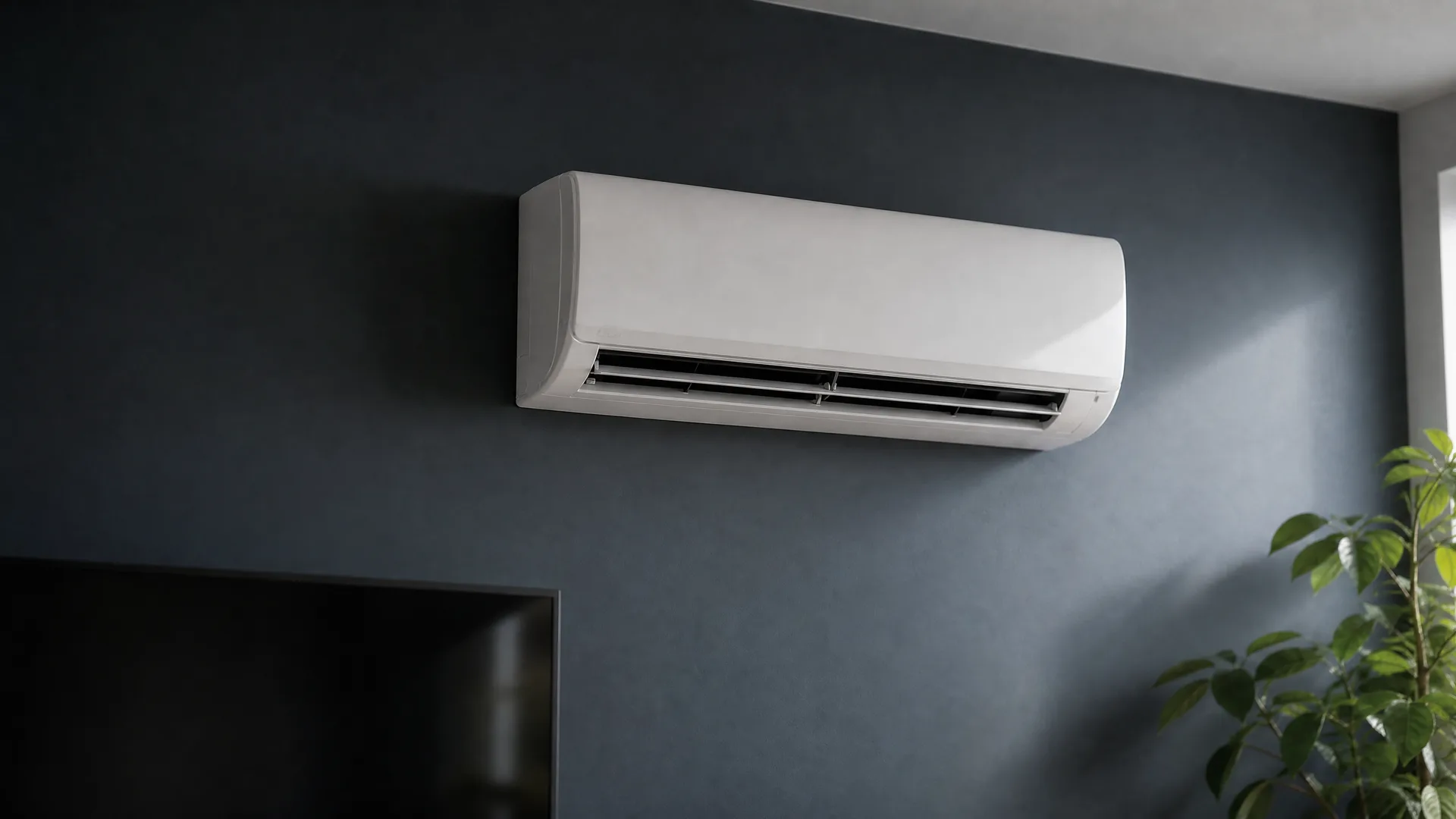
A white wall-mounted mini-split air conditioner on a dark gray interior wall, with a flat screen at lower left and a green leafy plant at lower right.

The right pro for this job

Step 1 of 3: Equipment