Defrost cycles
Idaho's cold, dry air frosts the outdoor coil often. Each defrost cycle pauses heating briefly. A tech checks the coil and sensors so cycles run only when actually needed.

Set your mini split to heat mode at 68 to 70 degrees and leave it there through an Idaho winter instead of bumping it up and down. The unit holds that temperature more efficiently than it recovers from swings, and in cold snaps below the teens it will lean on its backup heat strip or electric resistance element to keep up, which uses more power than the compressor alone. You will also see frost build up on the outdoor unit on the coldest, dampest days. That is normal. The unit runs a defrost cycle on its own to clear it, and for a few minutes the indoor fan may blow cool air while that happens. Don't switch it off or crank the thermostat when you see that. If frost is building up constantly, or the unit is running nonstop without warming the room, that is worth a look before it turns into a bigger repair come spring.




A mini split works by moving heat, not making it. Even on a cold Idaho morning there's still heat in the outside air, and the outdoor unit pulls it in and sends it inside. That gets harder as the temperature drops. Somewhere around 20 to 30 degrees, the system can't pull enough heat on its own, so it switches on backup electric resistance heat to make up the difference. That's expected, not a sign of trouble.
Idaho's winter air is cold and dry, and that combination frosts the outdoor coil. The system has to run a defrost cycle to melt that frost off, or it can't pull heat at all. During defrost, the indoor fan might pause, or it might blow air that feels cool for a few minutes. That's the system clearing itself out, not a breakdown, and it will go back to heating once the cycle finishes.
Leave the fan on auto instead of locking it to a fixed speed. The system adjusts airflow on its own as the load changes, which keeps it running the way it was built to run. One thing worth checking before winter sets in: a dirty outdoor coil or a clogged filter makes the unit defrost more often and lean on backup heat sooner than it should, which is exactly the kind of small problem that's easier to catch early than to fix after a cold month of it.


Idaho's cold, dry air frosts the outdoor coil often. Each defrost cycle pauses heating briefly. A tech checks the coil and sensors so cycles run only when actually needed.
A clogged filter makes the unit pull harder and lean on backup heat sooner than it should. A quick check catches it before a cold snap finds it for you.
You notice it most at daybreak, when the house is coldest and the outdoor unit has been working through the night. The air coming out of the indoor head feels cooler than usual, or the system seems to run without catching up. You might hear it humming longer between cycles, or notice frost built up on the outdoor coil that takes a while to clear. None of that means the unit is failing. But a mini split that's low on refrigerant or carrying a dirty filter into a hard freeze will lean on backup heat more than it should, and your gas furnace or backup resistance heat picks up the slack. That shows up as a higher bill before it shows up as a bigger repair.
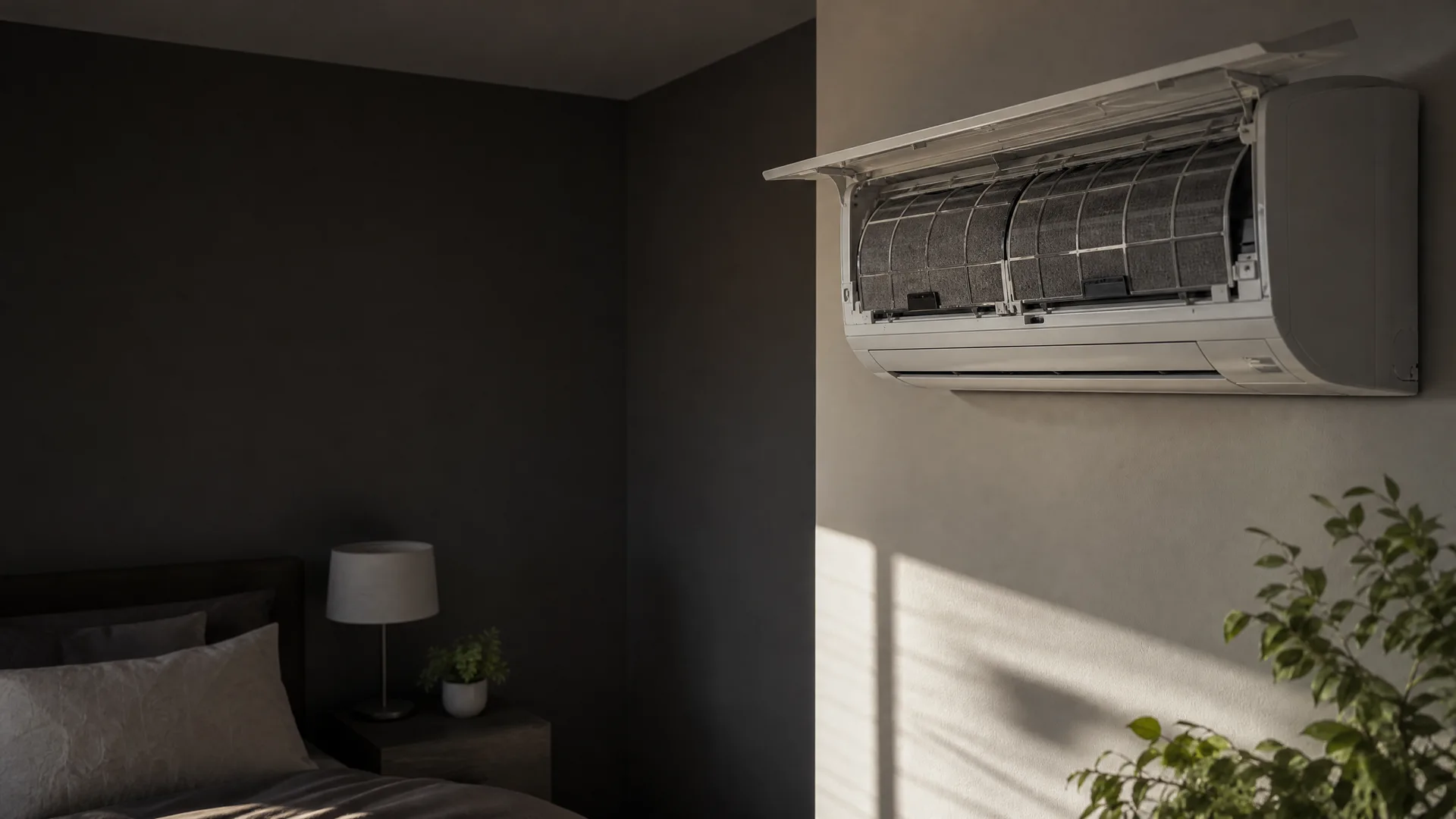
You wake up on a cold, clear February morning to pull the cover off the indoor unit in your bedroom, chasing a faint musty smell that's been bothering you for a week. The filter screen behind it is grey with dust, thick enough that light barely gets through. You run a finger across it and it comes away gray. The unit has been leaning on that filter all winter, pulling harder through it on the mornings Idaho's cold snaps bring, and you hadn't noticed until the smell gave it away. You set the cover down and look at the screen, wondering how long it's been like this.
You've read what your mini split is doing all winter and what a defrost cycle and a dirty filter cost you on the coldest mornings. Knowing that doesn't change the house. Someone still has to open the indoor units, check refrigerant charge, clean the outdoor coil, and confirm the defrost sensors are reading right, work that takes a license and a gauge set, not a thermostat setting. Finding that person yourself means searching, calling a few numbers, explaining the same thing each time, then sitting with quotes trying to guess who's worth the call. Send this request instead and that whole chore is gone. One contractor who knows mini splits and Idaho winters gets it, not five competing for your attention. You go back to the cold morning and the thermostat at 68, and the rest stops being something you have to manage yourself.
Some Idaho homes have the mini split working alongside a gas furnace, and it's tempting to let the furnace carry the cold snaps while the mini split sits idle. Gas heat recovers fast and doesn't care how cold it gets outside. But a mini split that sits unused for weeks can seize up when you finally need it, especially if the outdoor coil has frost or debris on it from sitting still. Running both in turns means neither gets enough use to show you a problem before it becomes one.
Running the mini split as your main heat source through the winter keeps it working steadily instead of starting and stopping, which is easier on the compressor and the outdoor fan. You'll notice sooner if something's off, a longer defrost cycle, a head that's not blowing as warm as the one next to it, because you're relying on it every day. Idaho's cheap power makes this the less expensive path too, even with backup resistance heat kicking in on the coldest nights below the teens.
At 11.83 cents per kilowatt-hour, running the backup electric heat on cold mornings costs less here than in most states. That's one more reason to leave the mini split at a steady 68 to 70 rather than shutting it off to save money during a cold snap.
EIA-861 2025 statewide residential average

The unit pulls air through a clear filter and an open coil, so it can actually deliver the heat it's making. Set it and leave it, and the indoor head keeps putting out warm air through the coldest stretch of January without straining.

Dust has built up across the casing and the filter has gone dark, so less air moves through it. The coil underneath works harder for less heat, and that grime is a place for mold to grow in a closed-up winter house.

Idaho summers don't feel as heavy as the heat index suggests. The average dew point across June, July and August runs 42°F, which is dry air by any measure. Your mini split isn't fighting moisture here, so it spends less time wringing water out of the air and more time just moving heat. That dry air also means the outdoor coil stays cleaner through summer than it will once winter's damp cold sets in. It's a good stretch to get the coil and filter checked, before the season turns and the unit starts working against frost instead of dust.
NASA POWER T2MDEW county cells weighted by homes



Set the mini split to 68 or 70 and leave it alone. The coil stays clear, the filter stays open, and the unit heats the house instead of fighting itself on the coldest mornings. That's the whole answer.
Keeping it that way is a different job than knowing it. It means someone checking the coil, the filter, and the refrigerant charge before the next cold snap, not after. If you'd rather not spend a weekend calling around for someone licensed to do that, comparing quotes, and explaining the same thing twice, send the form and that search is done for you. The house still needs the work. You just won't be the one tracking down who does it.






One form instead of hunting for a pro who does mini split tune-ups.
There's no charge for the request.